
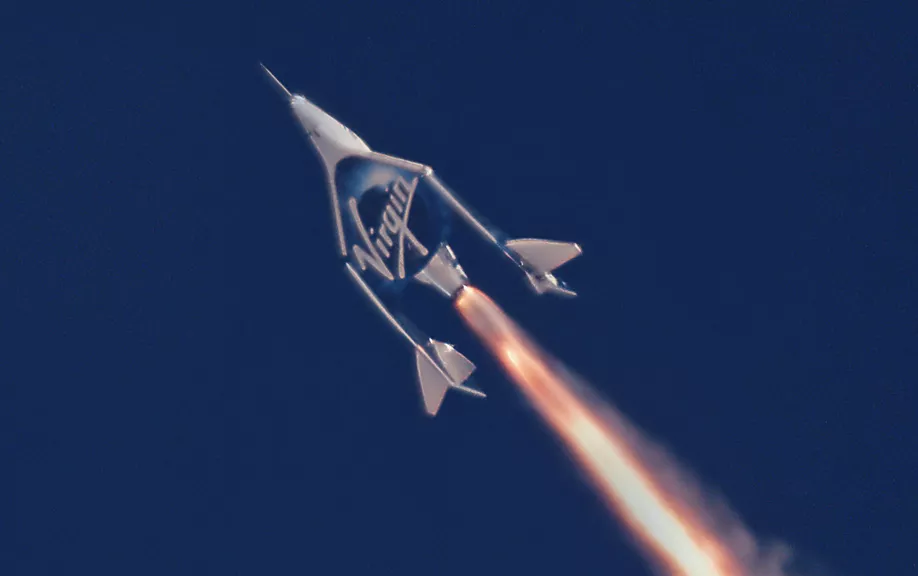
Two former marines have guided Virgin Galactic’s SpaceShipTwo to space but that now raises questions as to where space officially begins. Mark Stucky, 60, and Frederick Sturckow, 57, departed from Virgin Galactic’s hangar in Mojave, California reaching Mach 2.9 and a maximum height of 82.72 km (51.4 mi), earning them their astronaut wings from NASA. The bittersweet achievement comes after the death of former pilot Michael Alsbury in the fatal test flight aboard the SpaceShipOne in 2014.
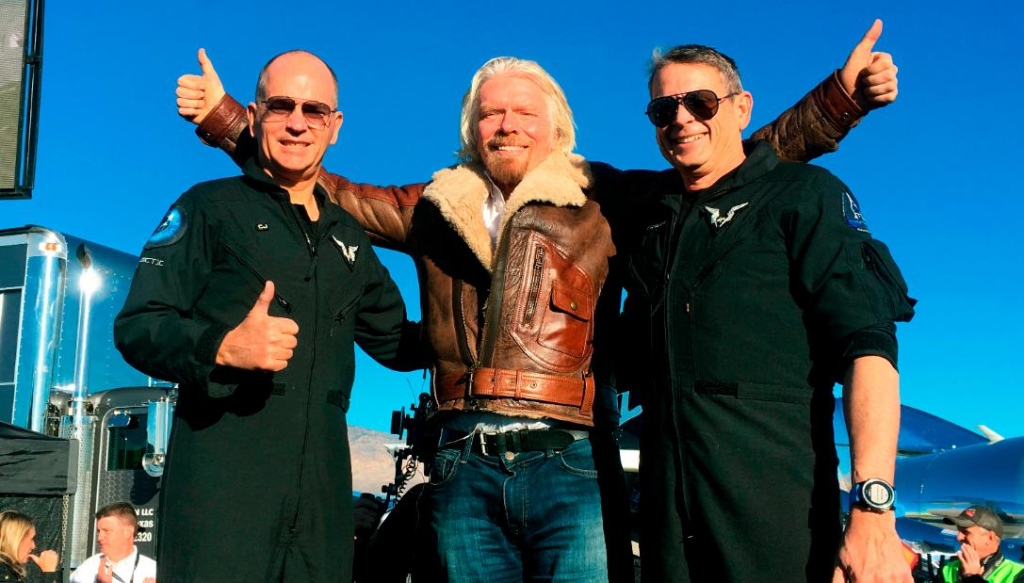
Virgin Galactic co-founder Sir Richard Branson was there to congratulate the pilots on the feat and signal to customers and stakeholders that the organisation is on track to begin commercial operations. Tickets have been sold for approximately US$250,000 but nothing similar to what SpaceX has planned is on the table yet, Elon Musk’s firm planning orbits around the moon.
With commercial space tourism becoming a reality with every passing day and the United States Space Force also in the making, the need for a uniform definition of space is needed now more than ever. The Karman Line, named after aerospace engineer Theodore von Karman, served as the boundary since the mid-20th century at 100 km, but a recalculation in the Acta Astronautica journal earlier this year has found it to be much closer and placing the SpaceShipTwo flight within the boundaries of space. Such calculations can also make a difference in tense political situations. When reports emerged last year of North Korea launching a rocket over Japan’s airspace it was actually launched into space and higher than the International Space Station. With that in mind, it also means that Nazi Germany won the space race in the 1940s with the V-2 rockets in the mid-1940s while the first humans there were the test pilots on the North American X-15. Countries with minimal air space access due to regional politics may also opt to utilise the Karman Line in extreme cases rather than navigating around several international borders.