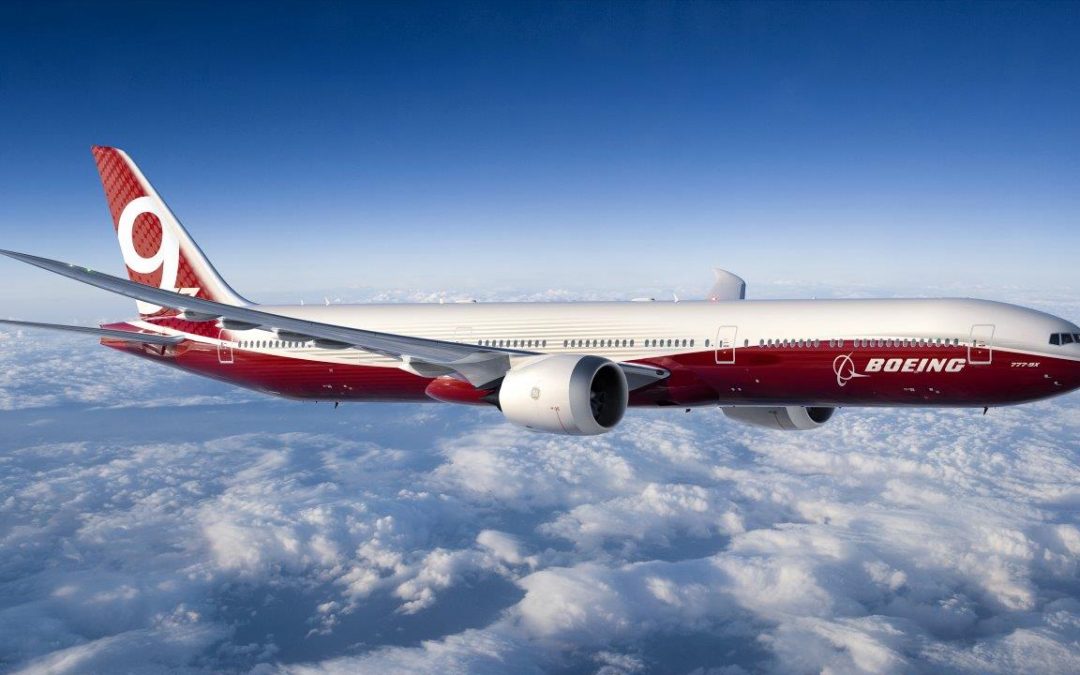
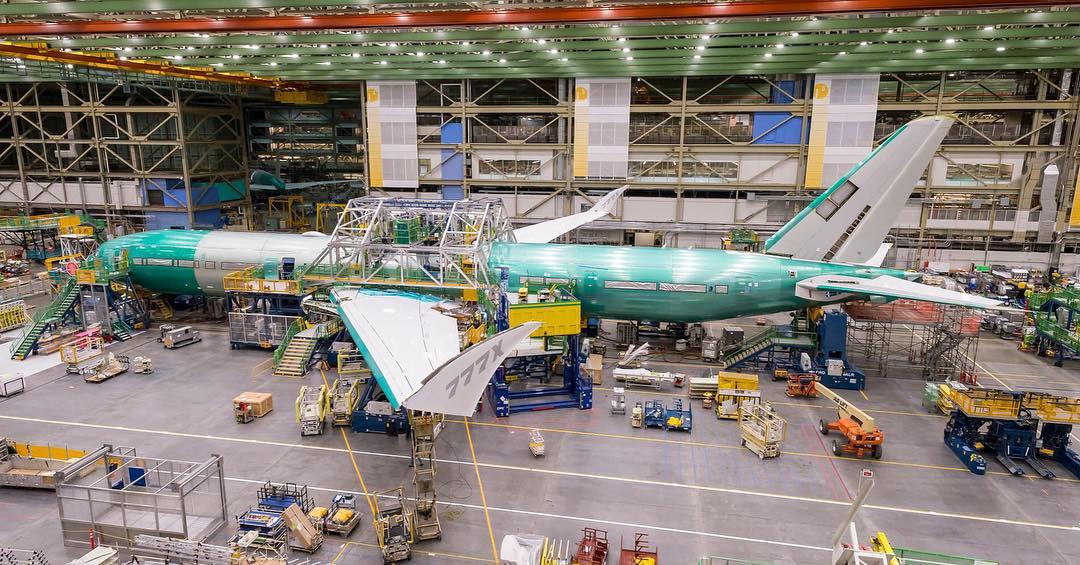
Since the Boeing 777 was first introduced in 1995 as a replacement for the B747 and B767 it has gone from strength to strength, being adopted by the world’s top airlines such as Emirates and Cathay Pacific and developing four variants. Building upon the lessons learned and the technology developed with the B787 program, Boeing launched the renewal program in 2013 to ensure the aircraft remains at the forefront of the twin-engine long-haul market with the possibility of replacing even the A380. As of October 2018, Boeing had 326 orders for the B777X between seven identified customers; ANA All Nippon Airways, Cathay Pacific, Emirates, Etihad, Lufthansa, Qatar Airways and Singapore Airlines, six of which were voted among the world’s best airlines in 2018. 53 of those orders are for the B777-8X which measures 70 metres long with a range of 16,090 km (8,690 nmi) and capacity of 365 passengers in a 2-class configuration. The majority are for the larger B777-9 with a length of 77 metres, range of 13,940km (7,525 nmi) and a capacity of 414 passengers in a 2-class, or 349 in a 3-class configuration. Both models have a wingspan of 71.8 metres which is reduced to 64.8 metres when the tips are folded.
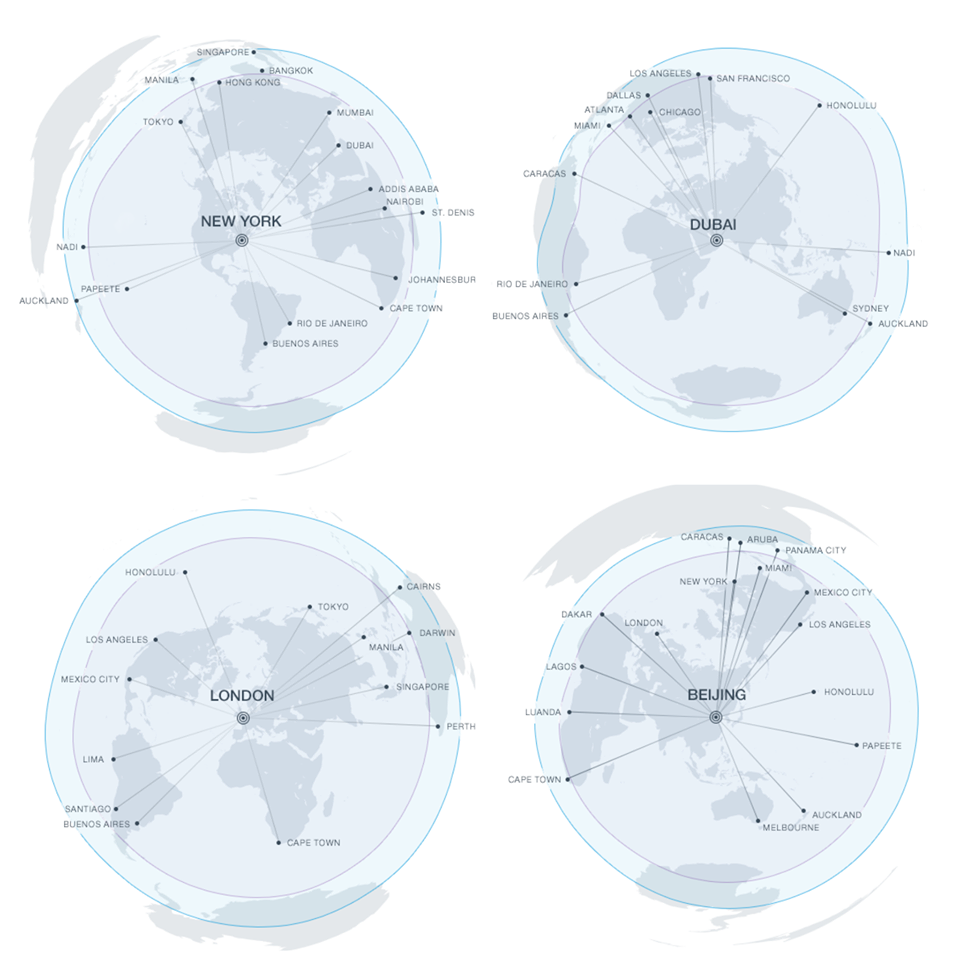
The 777X’s range capability means that it will be able to reach most major cities and capitals from some of the busiest airportsin the industry. Boeing’s assessments have determined a 12% improvement in fuel efficiency as a result of improved aerodynamics and a 10% improvement in operating economics (relative fuel consumption per seat) over the B777’s rival A350-1000. Such substantial efficiencies translate to decreased operating costs and increased net profit for the operators as well as the reliability that comes with a new aircraft. Overall aerodynamic efficiency over the A350-1000 amounts to 5% with this being achieved through a longer wingspan resulting in a better lift to drag ratio and smoother airflow over the nacelles reducing drag. Unfortunately, we will not be seeing the “shark teeth” chevrons introduced onthe nacelles of the B787 but we will see the folding wingtips give the B777X access and manoeuvrability in more Class E airports around the world.
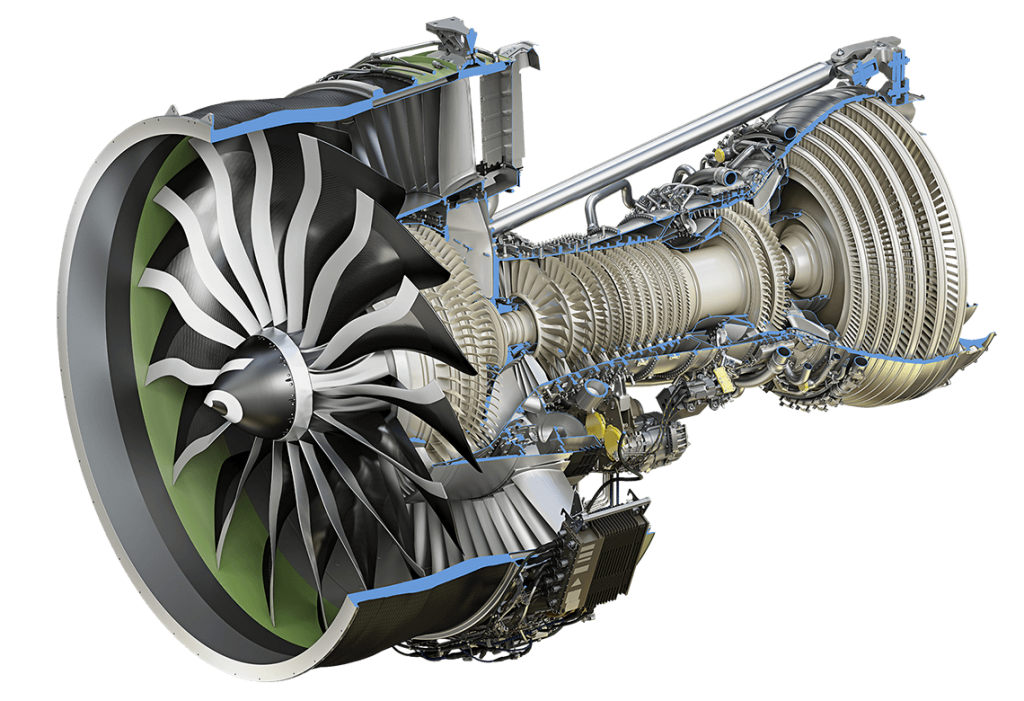
Inside the flight deck pilots will be treated to the new touch screens with increased connectivity between the flight crew, operations and passengers. GE Aviation has also incorporated cutting edge designs and technology into the new engine, the GE9X, designed especially for this aircraft. Compared to its predecessor, the GE90-115B, it will burn 10% less fuel and has a 5% improvement on fuel consumption compared to any twin-aisle engine on the market. Coupled with the smoother airflow over the nacelles, the engine’s noise emissions have been placed at 12db within the Stage 4 Margin.